🎓 B.Ed Admission 2026–2028 Open - Direct Admission in MDU, CRSU & Kurukshetra University | Limited Seats | Call: +91 9773911367 (GET ADMISSION TODAY)!!

B.Ed Admission 2026: Registration, Qualification, Admission Process

Table of Contents

B.Ed Admission 2026 Registration

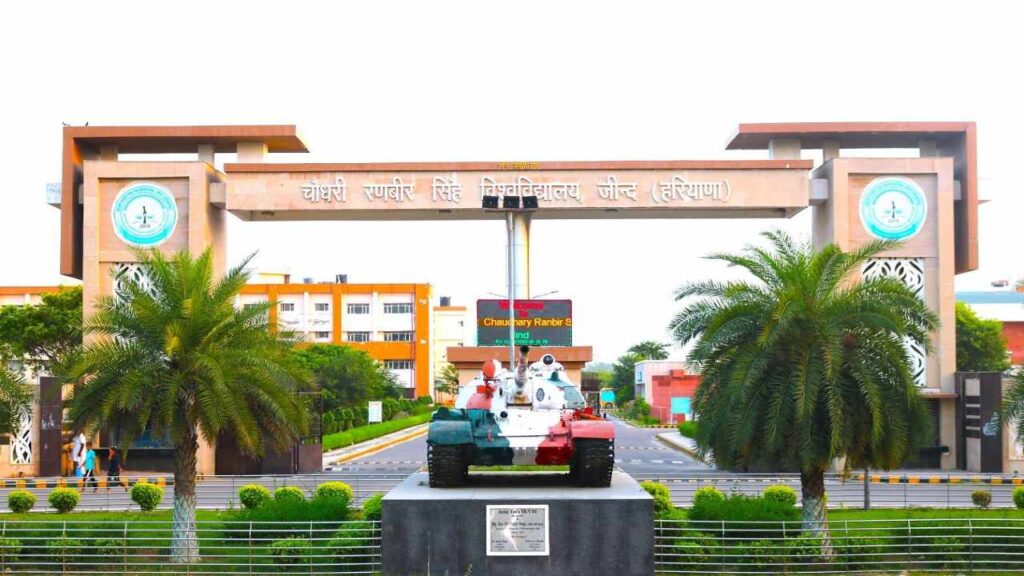
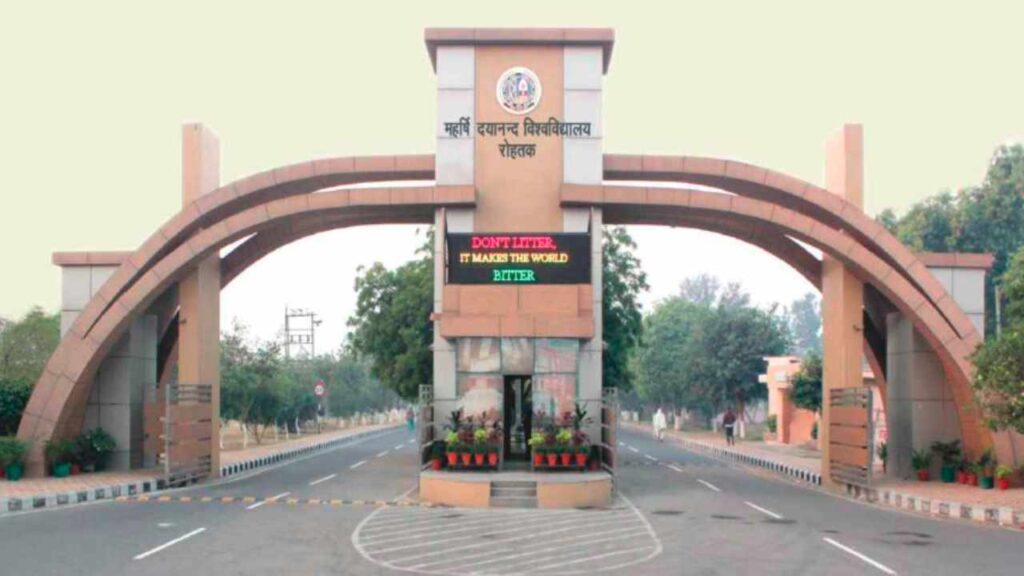
Planning a career in teaching? B.Ed Admission 2026 is now open across Delhi NCR and affiliated universities including MDU Rohtak, CRSU Jind, and Kurukshetra University. Whether you’re a fresh graduate looking to enter the classroom or a working professional seeking a formal teaching qualification, this guide covers everything you need to know before you apply.

What Is a B.Ed Degree and Why Does It Matter in 2026?

A Bachelor of Education (B.Ed) is the statutory minimum qualification for teaching in recognised schools in India, as mandated by the National Council for Teacher Education (NCTE). Without a valid NCTE-approved B.Ed, you cannot appear for CTET, UPTET, DSSSB, or most state TETs — the gateway exams for government school teaching jobs.

India has more than 8,000 B.Ed colleges, of which about 6,370 are privately run and 419 are government institutions (Shiksha, 2026). Government school teachers typically earn ₹45,000 to ₹80,000+ per month, while private school salaries range from ₹15,000 to ₹40,000 — making a B.Ed one of the better investments in long-term career security available to graduates today.

2026 update worth knowing: NCTE has introduced a one-year B.Ed track for candidates who hold a four-year undergraduate degree or a postgraduate degree. If you have a standard three-year bachelor’s degree, the two-year route still applies. Always confirm the current structure with NCTE’s official portal at ncte.gov.in before enrolling.

What Are the Eligibility Criteria for B.Ed Admission 2026?

To be eligible for B.Ed Admission 2026, you need to meet the following NCTE-specified conditions:

Academic qualification: Graduation (BA, BSc, BCom, or any equivalent UG degree) from a recognised university. Final-year students may apply, but admission is confirmed only after successful degree completion.

Minimum marks:

  • General category: 50% in graduation
  • SC/ST/OBC categories: 45% (varies slightly by state — e.g., Haryana applies 47.5% for SC/ST)

Age limit: No upper age limit for B.Ed admission at most state universities, as per NCTE norms (askinstitute.in, 2026).

Subject specialisation: NCTE recognises Hindi, English, Mathematics, Science, Social Science, Commerce, Computer Science, and several other teaching subjects. During counselling, you typically select two teaching subjects that match your UG stream.

One thing that surprises many applicants: a non-NCTE-approved B.Ed — from an unrecognised college or an unregistered distance provider — makes you ineligible for TET exams and government school appointments, regardless of marks. Always verify the college’s recognition status on the NCTE website before paying fees.

What Is the Fee Structure for B.Ed in 2026?

Fees vary significantly depending on whether you attend a government or private college.

College TypeApproximate Total Fee (2-year course)
Government / state university₹10,000 – ₹50,000
State university (aided private)₹30,000 – ₹80,000
Private self-financed college₹50,000 – ₹2,50,000
IGNOU (distance mode)₹55,000 – ₹65,000 (full course)

Sources: CollegeDekho, 2026; Propelld, 2026; Matrise Education, 2026

For Uttar Pradesh specifically, application fees are ₹1,400 for general candidates and ₹700 for reserved categories. Private UP colleges typically charge ₹65,000 to ₹80,000 for the full two-year programme.

If you belong to SC/ST/OBC categories, you may be eligible for fee reimbursement through state government scholarship schemes. Check the National Scholarship Portal at scholarships.gov.in for currently active schemes.

B.Ed Admission 2026 Fee Structure at Sardar Patel Educational Institute

Students seeking admission assistance through Sardar Patel Educational Institute can explore various NCTE-approved B.Ed colleges affiliated with universities such as MDU Rohtak, CRSU Jind, and Kurukshetra University. The fee structure varies depending on the college, university affiliation, and facilities offered by the institution.

University / College TypeApproximate Total Course Fee
MDU Rohtak Affiliated Colleges₹60,000 – ₹1,20,000
CRSU Jind Affiliated Colleges₹55,000 – ₹1,10,000
Kurukshetra University Affiliated Colleges₹60,000 – ₹1,25,000
Private Self-Financed Colleges₹70,000 – ₹1,50,000+

Note: The above fees are approximate and may vary according to the college, university regulations, hostel facilities, examination fees, and other applicable charges. Candidates are advised to confirm the latest fee details before taking admission.

Which Entrance Exams Are Required for B.Ed Admission 2026?

Not all B.Ed admissions require an entrance exam — many private colleges admit on merit (graduation marks). That said, government colleges and state universities almost universally require an entrance test.

Here are the major entrance exams state-by-state:

State / LevelEntrance Exam
Uttar PradeshUP B.Ed JEE (conducted by state universities)
BiharBihar B.Ed CET
RajasthanPTET (Pre-Teacher Education Test)
Madhya PradeshMP B.Ed CET
MaharashtraMAH B.Ed CET
Delhi (IP University)IPU CET
Central universitiesCUET-PG (B.Ed paper)
Integrated 4-yr ITEPNCET 2026 (NTA-conducted)
IGNOU distance B.EdIGNOU B.Ed Entrance Test

Source: Collegedunia, 2026; Propelld, 2026

For the 4-year Integrated Teacher Education Programme (ITEP), qualifying NCET 2026 is mandatory but does not guarantee admission. Over 200+ institutions participate in NCET counselling, with an expected 16,000+ seats for the 2026–27 session (assamjobapply.com, 2026).

Exam prep tips: Focus on Teaching Aptitude, General Knowledge, Reasoning, and Language Ability — these sections carry the highest weightage. Practice previous-year papers and attempt mock tests at least 4–6 weeks before your exam date

What Documents Do You Need for B.Ed Admission 2026?

Preparing your documents early saves time during counselling. Here’s a standard checklist:

  • Class 10 marksheet and certificate (for date of birth proof)
  • Class 12 marksheet and passing certificate
  • Graduation marksheets (all semesters/years)
  • Graduation degree or provisional certificate
  • Category certificate (SC/ST/OBC/EWS, if applicable)
  • Transfer certificate (TC) from the last institution attended
  • Migration certificate (for students from outside the state)
  • Character certificate
  • Passport-size photographs (recent, white background)
  • Aadhaar card / government-issued photo ID
  • Valid entrance exam scorecard (if applicable)

Some universities additionally require a Medical Fitness Certificate. Always check the official prospectus of the specific university you are applying to, as requirements vary.

What Is the Step-by-Step Admission Process for B.Ed 2026?

Most state universities follow a common sequence for B.Ed admission:

Step 1 — Check the official notification. State universities release B.Ed admission notifications between March and May each year. Visit the official university website directly — do not rely on third-party portals alone.

Step 2 — Fill the application form. Register on the university or state admission portal with a valid mobile number and email ID. Enter your personal and academic details accurately.

Step 3 — Pay the application fee. The application fee typically ranges from ₹500 to ₹1,500. Payment is accepted via UPI, net banking, or debit/credit card.

Step 4 — Appear for the entrance exam (where required). Bring a printed admit card and a valid photo ID. Results and merit lists are published online within 2–4 weeks after the exam.

Step 5 — Attend counselling. Shortlisted candidates are called for online or offline counselling. Here you select your preferred college, university, and teaching subject combination.

Step 6 — Document verification and fee payment. Submit original documents at the college, pay the semester/annual fee, and confirm your seat.

Step 7 — Classes begin. Once formalities are complete, you are a registered B.Ed student. The 2026–27 session typically starts in August.

At Sardar Patel Educational Institute, we support candidates through direct admission to NCTE-approved colleges affiliated with MDU Rohtak, CRSU Jind, and Kurukshetra University — without requiring an entrance exam for institute-level admissions, subject to merit and seat availability.

What Is the B.Ed Syllabus and How Is It Structured?

The two-year B.Ed curriculum follows the NCTE framework and includes four broad components:

Perspective courses cover the philosophical and sociological foundations of education, child development, and psychology of learning.

Curriculum and pedagogical studies include subject-specific methodology courses. You study how to teach your chosen subjects effectively at secondary and senior secondary levels.

Engagement with the field is the practical component: school internships, lesson planning, teaching practice, and community engagement. This runs across both years.

EPC (Enhancing Professional Capacities) covers communication skills, drama and art in education, critical thinking, and ICT integration.

Assessment is continuous — through internal assignments, practicals, semester-end exams, and teaching practice evaluation. There’s no single final year board exam that determines everything.

What Are the Career Paths After Completing B.Ed?

A B.Ed from an NCTE-approved college opens several career routes:

Teaching in government schools requires qualifying the relevant TET after B.Ed. CTET (Central Teacher Eligibility Test) qualifies you for KVS, NVS, and central government school appointments. State TETs (UPTET, HTET, PSTET, etc.) qualify you for state government schools in the respective state.

Government school teachers earn ₹45,000 to ₹80,000+ per month with job security, pension, and promotion pathways (AFTE Institute, 2026). Private school positions vary widely — from ₹15,000 to ₹40,000 at most schools, higher at international or premium institutions.

Beyond classroom teaching, a B.Ed also opens doors to: academic coordination and school administration, educational content development, EdTech training and curriculum design, counselling roles (with additional qualifications), and M.Ed or PhD pathways for research and higher education careers.

Common FAQs about B.Ed Admission 2026

Can I pursue B.Ed after completing BA/BSc/BCom?

Yes. Candidates who have completed BA, BSc, BCom, or any equivalent bachelor’s degree from a recognized university with the required minimum percentage are eligible for B.Ed admission at Sardar Patel Educational Institute.

No, there is no upper age limit for B.Ed admission at Sardar Patel Educational Institute, as per NCTE norms.

What is the duration of the B.Ed program?

The B.Ed program is a 2-year full-time regular course, approved by NCTE and affiliated with a recognized university.

Does Sardar Patel Educational Institute offer B.Ed through distance or online mode?

No. As per NCTE guidelines, B.Ed is offered only in regular, full-time mode. Distance or online B.Ed programs are not valid for teaching jobs.

What is the fee structure for B.Ed at Sardar Patel Educational Institute?

The B.Ed fee structure is affordable and institute-approved. Fees may vary slightly each academic year. Candidates are advised to contact the admission office for exact and updated fee details.

Is B.Ed mandatory for teaching jobs?

Yes. A B.Ed degree from an NCTE-recognized institution like Sardar Patel Educational Institute is mandatory for teaching positions in government and private schools.

How can I verify the authenticity of Sardar Patel Educational Institute?

Sardar Patel Educational Institute is recognized by NCTE and affiliated with a recognized university. Students can verify recognition details on the official NCTE website.

What is the admission process for B.Ed 2026 at Sardar Patel Educational Institute?

Admission is offered through direct admission (merit-based) as per university and NCTE guidelines. Eligible candidates can apply by visiting the institute or contacting the admission office for counseling and seat availability.

Can I get direct admission in B.Ed at Sardar Patel Educational Institute?

Yes. Direct admission is available for eligible candidates based on academic merit and availability of seats. No entrance exam is required for institute-level admissions.

Is entrance exam mandatory for B.Ed admission here?

No. Entrance exams are not mandatory for direct admission at Sardar Patel Educational Institute. Admission is granted on a merit and eligibility basis.

Read More👉: Top 10 Universities For B.Ed. Admission Without an Entrance Exam

Conclusion

B.Ed Admission 2026 is a great opportunity for aspiring teachers. Whether you aim for B.Ed from Delhi University or need help from a B. Ed Admission Consultant, proper planning is essential.

Choosing the right institute like Sardar Patel Education Institute can make your admission process smooth and hassle-free.

Uma Sharma

Admissions Guidance Desk, Sardar Patel Educational Institute 10+ years supporting B.Ed admissions through MDU, CRSU & Kurukshetra University
Facebook
WhatsApp
Telegram
Reddit

Leave a Reply

Your email address will not be published. Required fields are marked *

Get Free Consulting!

Contact Form

Recent Blogs

error: Content is protected !!
B.Ed Admission 2026 Registration

Enroll For B.ED Admission

b.ed pop up